


- September 2, 2026
- by excelhospital
- Orthopedic
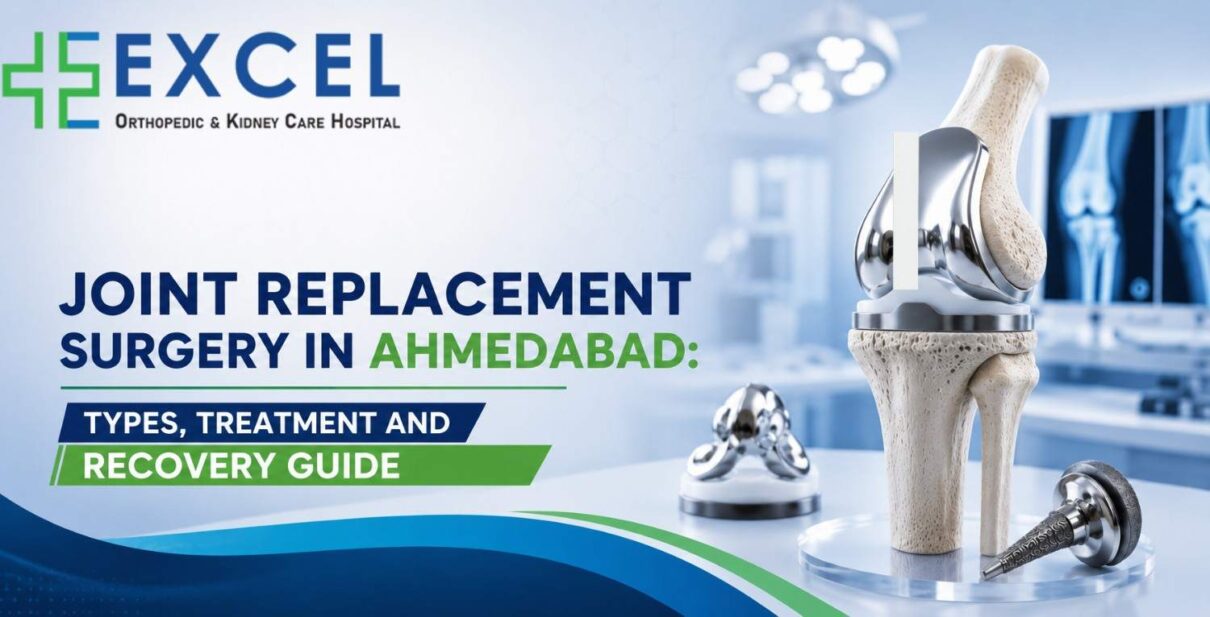
Joint Replacement Surgery in Ahmedabad: Types, Treatment and Recovery Guide
Painful joints can have a considerable impact on an individual’s life, as they can make simple activities like walking, climbing stairs, sitting, standing, and doing household work tough. Although there are several joint diseases that can be effectively treated with medications and physiotherapy, among others, serious joint issues may sometimes necessitate Joint Replacement Surgery in Ahmedabad if the pain and limited movement adversely impact everyday activities.
Joint replacement surgery is one of the major procedures in orthopedics, wherein an injured or worn joint is replaced by an artificial joint. The main objectives of such surgery include alleviation of pain, restoration of joint motion, increasing mobility, and helping patients resume their normal activities. It is essential to have knowledge about the surgery, different types of joint replacement, treatment process, preparation, and post-surgery recovery before opting for any medical procedure.
In cases where a person requires excellent orthopedic care, Excel Orthopedic & Kidney Care Hospital offers services that revolve around ensuring proper diagnosis, treatment, surgery, and rehabilitation for its patients. It works towards ensuring that the patients receive all the necessary help to improve their mobility and enhance their quality of life.
What Is Joint Replacement Surgery?
Joint replacement surgery is the removal of the damaged part of a joint and replacing it with an artificial implant. This artificial joint is intended to substitute the function of the natural joint and to give better movement.
The most commonly replaced joints include:
- Knee joint
- Hip joint
- Shoulder joint
- Other joints in selected cases
When conservative treatments no longer provide enough relief, joint replacement is usually recommended for severe joint damage. Whether you need surgery depends on how much damage there is to the joint, how much pain you have, how much your movement is limited, your overall health and how much the condition interferes with everyday activities.
A comprehensive orthopedic assessment is critical to determine if joint replacement is the appropriate treatment choice.
When Is Joint Replacement Surgery Recommended?
Not all joint pain patients need a joint replacement. Many orthopedic conditions may be treated non-surgically in their early stages. But if the joint damage is severe and starts to significantly impact quality of life, surgery could be an option.
Understanding the Joint Replacement Treatment Process
Joint replacement treatment is not just the surgical procedure. The process typically involves several key stages, beginning with an orthopedic consultation and continuing through diagnosis, treatment planning, surgery, and rehabilitation.
Initial Orthopedic Consultation
The process starts with an extensive consultation, during which the orthopedist will analyze patient symptoms, pain level, ability to move, previous treatments, medical background, and influence of the joint problem on everyday activities.
Diagnostic Evaluation
Imaging studies including X-ray and others can be suggested to evaluate the state of the joint. These tests will allow the doctor to evaluate the state of cartilage, bones, joint position and the overall severity of the case.
Personalized Treatment Planning
Every patient requires specific health care requirements. After carrying out an evaluation, the orthopedic professionals can suggest some treatment alternatives to you. The extent of the disease will determine whether it is going to be treated through medicines, physiotherapy, surgery, or injections.
Surgical Planning
Once it is determined that joint replacement is needed, the medical staff creates a personalized plan for the surgery. The procedure, choice of implants, approach to surgery, and post-surgery recovery can depend on the patient’s needs and the specific joint involved.
Post-Surgical Rehabilitation
Recovery and rehabilitation are essential aspects of the entire treatment procedure. Exercise under physiotherapy can assist in building muscle strength, joint flexibility, balance, and mobility after the operation.
This gradual process makes sure that patients get the proper care needed during their joint replacement experience, right from the beginning to the end.
Types of Joint Replacement Surgery
Joint replacement is determined based on which joint is affected and to what extent it has been damaged. Common procedures for joint replacement surgery are knee and hip joint replacement.
Total Knee Replacement
Total knee replacement is considered one of the most performed joint replacement surgeries. In this procedure, damaged surfaces of the joint are replaced with artificial implants.
The procedure may be recommended for patients with advanced arthritis or severe joint damage causing:
- Persistent knee pain
- Difficulty walking
- Knee stiffness
- Swelling
- Reduced range of motion
- Difficulty climbing stairs
- Pain during routine activities
The objective of knee replacement is to reduce pain and improve the functional movement of the knee.
Partial Knee Replacement
However, in certain cases, there might be damage to a single area of the knee joint. Here, a partial knee joint replacement could be more appropriate than joint replacement of the whole knee joint.
There are different factors that need to be considered when opting for a partial knee joint replacement. These include the position of the damage, ligaments, alignment, and general health of the knee joint.
Total Hip Replacement
Hip replacement is an orthopedic procedure performed by using artificial parts to replace those of the hip that have been damaged. This surgical procedure can be done for severe arthritis, fractures, avascular necrosis, among others.
Common symptoms that may indicate severe hip joint problems include:
- Persistent hip pain
- Pain in the groin or thigh
- Difficulty walking
- Stiffness
- Difficulty getting up from a chair
- Difficulty climbing stairs
- Reduced ability to perform daily activities
Hip replacement can help reduce pain and improve mobility when the hip joint is severely damaged.
Shoulder Replacement
Replacement of the shoulder joint can be an option in the case of severe arthritis, shoulder joint damage, fracture, and any other disease that might have affected the shoulder joint.
A patient suffering from shoulder joint problems will suffer from pain, stiffness, weakness, and inability to lift their arm.
How Is Joint Replacement Surgery Diagnosed and Planned?
An orthopedic assessment will be carried out before the surgeon recommends surgery. The plan of care is tailored to suit the specific condition of the patient.
The evaluation may include:
Medical History
The symptoms of the patient, pain duration, history of injury, existing health conditions, past treatments, and any medication that the patient might be using are among the factors considered.
Physical Examination
Pain, stiffness, swelling, deformities, instability, muscle strength, and range of movement can be examined in the affected joint.
Imaging Tests
The x-ray examination is the most common way of examining the state of the joint; however, further testing depending on circumstances might be needed in order to identify the level of damage.
Pre-Surgical Health Assessment
Prior to surgery, the general health of the patient is examined. There may be a need for blood tests and other examinations in order to make sure that the patient is ready for the surgery.
A carefully planned treatment approach can help improve surgical safety and recovery outcomes.
Benefits of Joint Replacement Surgery
Joint replacement surgery, if done properly and following an appropriate evaluation, can bring many advantages.
Reduced Joint Pain
Pain reduction is among the major reasons to choose joint replacement surgery since the joint pain becomes too severe for the patient.
Improved Mobility
There might be better movement and performance of different activities in the case of a successful operation and full recovery of the patient.
Better Quality of Life
Due to the reduction of pain and improvement of mobility, there will be an opportunity for the patient to take part in different activities both at home and outside without feeling discomfort.
Improved Independence
It might become easier for the patient to walk, climb stairs, sit and stand. Modern techniques have allowed improving the outcomes of joint replacement surgery.
Long-Term Functional Improvement
Modern joint replacement techniques and implant technology have improved the potential for long-term joint function. However, outcomes can vary from person to person and depend on multiple factors.
Recovery After Joint Replacement Surgery
Recovery from surgery is a multifaceted process and one part of the greater whole. Physiotherapy, the right mindset, and lifestyle changes are among the many things integral to a successful recovery post-surgery.
Early Recovery
Post-surgery patients are monitored and made to start moving in a way deemed appropriate to their healing process by the surgery team. Moving is important to circulation and helps ward off complications.
Physiotherapy
Most rehabilitation plans are built with the intention of increasing the range of motion for joints, building stronger and bigger muscles, improving balance and flexibility, and walking.
Return to Daily Activities
Prior to the completion of the recovery process people are usually allowed to start resuming their day to day activities. The amount of time that passes in between how long the activities were restricted varies from person to person and is dependent on the type of surgery and the recovery progress.
Rehabilitation and recovery in general is not a sprint. The right mindset with the commitment to physiotherapy and positive post-operative care all play a role in the recovery process and getting back to living life to the fullest.
Strengthening Muscles
Pre-operative exercises, if suggested by the orthopedic team, may help make muscles stronger and help the body get ready for rehab.
Controlling Health Conditions
Prior to surgery, it is important to control health conditions such as diabetes and high blood pressure.
Home Preparation
Setting up the home to help with recovery by making it easier to move around for the first part of recovery will help some patients.
Rehab Plan Awareness
Having an understanding of what will happen after surgery, helps patients with the adherence of physiotherapy and recovery, and further instructions.
Finding the Best Joint Replacement Surgeon in Ahmedabad
When it comes to Joint Replacement Surgery, the most important consideration is the surgical team. The Best Joint Replacement Surgeon in Ahmedabad has to be chosen based on the surgeon’s skills and experience performing that specific surgery, as well as the approach to treatment, the hospital, care standards and rehabilitation.
In a consultation at the Excel Orthopedic & Kidney Care Hospital, it is necessary for patients to be able to talk about their symptoms, the different types of treatments that can be provided, the recovery period, the risks associated with such procedures, and the after care that will be provided. Through a proper consultation session, patients are able to know whether joint replacement is the right treatment for them.
Frequently Asked Questions
When should I consider joint replacement surgery?
It may be considered when severe joint pain and damage affect movement and daily activities.
How long does joint replacement recovery take?
Recovery varies by patient and procedure, with physiotherapy playing an important role.
How do I choose the Best Joint Replacement Surgeon in Ahmedabad?
Consider the surgeon’s experience, expertise and approach to treatment.
Where can I get Joint Replacement Surgery in Ahmedabad?
Excel Orthopedic & Kidney Care Hospital provides comprehensive orthopedic care and treatment.
Conclusion
Joint replacement surgery is something that can be considered by individuals experiencing constant joint pain caused by damaged joints. If you are thinking about joint replacement surgery in Ahmedabad, the first thing to do is have an orthopedic checkup in order to decide on the best course of action. Excel Orthopedic & Kidney Care Hospital provides all types of orthopedic services and will help you solve joint-related issues efficiently. Schedule a consultation with our orthopedic specialists today to discuss your symptoms and explore the right treatment options for your joint health.